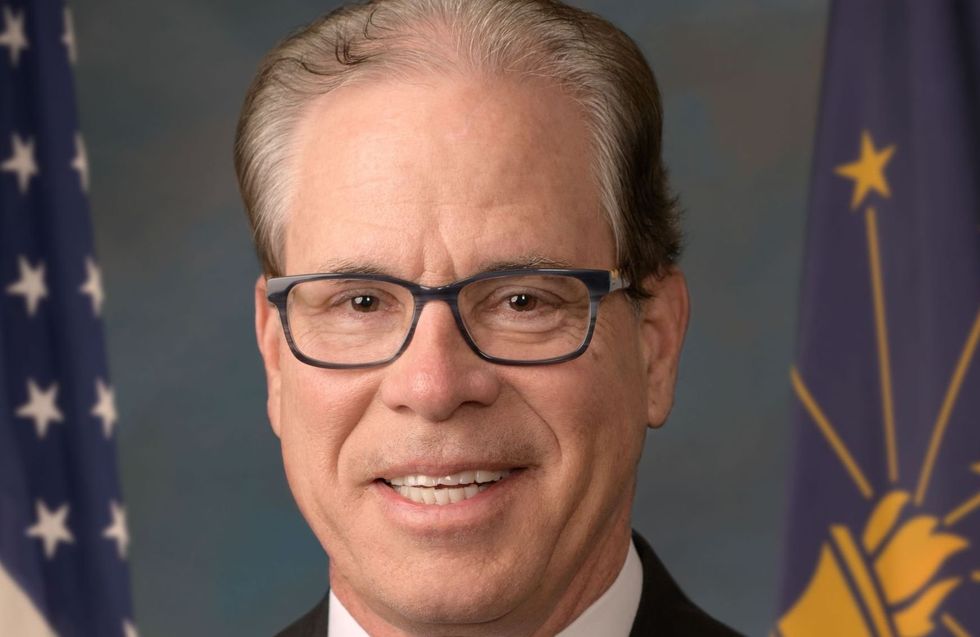
In the aftermath of President Donald Trump’s failed push to get Indiana Republicans to pass an extreme mid-decade gerrymander deleting all Democratic congressional seats in the state, GOP officials there who supported the effort are admitting defeat and facing recriminations from within their own party. Trump threw everything he could at getting Indiana to pass the new map, sending Vice President JD Vance to the state multiple times, and Gov. Mike Braun and the congressional GOP delegation endorsed the plan. But after a bitterly divisive session that involved GOP holdouts being targeted with violent threats, Braun has acknowledged it’s not going to happen anytime soon.“I don’t intend to call another special session to push early redistricting. I think that ship has sailed,” said Braun, according to State Affairs. Meanwhile, according to the Indiana Capital Chronicle, bad blood is still simmering within the state GOP from how officials turned on each other over the proposal. Sen. Jean Leising of Oldenburg, a 25-year lawmaker who voted against redistricting, said in no uncertain terms that Braun should make nice with Senate President Pro Tempore Rodric Bray, who came under heavy MAGA fire as the voice of the majority of the GOP caucus who opposed the plan. “If he were asking me, ‘What should I do next?’ I’d say, ‘You need to apologize to Senator Bray, our pro tem.’ Because he actually said that he wanted to work against him,” she said. Meanwhile, another redistricting opponent, Sen. Sue Glick of LaGrange, said of the current atmosphere, “I don’t think anybody wants to have a lasting impact. There will be some hard feelings. But I thought that we kept it under control. There didn’t seem to be the acrimony on the floor that you might have anticipated. Most of that was coming from outside.”Some external GOP groups, like Turning Point USA, campaigned hard for redistricting and have threatened to commit time and money to primary challenges against those who voted it down. Trump himself has echoed these threats.
Tag: congressional

‘Moment of truth’ imminent as military brass pushed to turn of Trump: DC insider
Donald Trump’s attack on members of Congress who served in the military for advising those currently serving not to follow illegal orders could have a ripple effect that blows up on him, an expert warned Tuesday. During an appearance on MS NOW, longtime Washington D. C. observer John Heilemann suggested the president may face a reckoning now that Defense Secretary Pete Hegseth is going after Sen. Mark Kelly (D-AZ), a popular former Navy pilot and astronaut. Speaking with the hosts on “Morning Joe,” Heileman made the case that it is only a matter of time before retired and active duty military personnel turn on the president, whose popularity is already slipping. Admitting that he was stunned that Hegseth is focusing on Kelly, he added that it could be the straw that broke the camel’s back within the military ranks.“The question for me is, when do we get to the point where active duty senior military officials start to speak up, because they have kept quiet?” he told the panel. “When Trump gave speeches at Fort Bragg and West Point, a lot of them were upset about it because they were so partisan and political.”“They have kept quiet in the face of the discussions of sending in the military to a place like Chicago and Los Angeles and other places, but I think there’s a moment that’s coming, and I think a lot of people in the military recognize this, where not just retired, but where current active duty senior military who are clearly, quietly troubled by everything that’s going on with this, are going to face a moment of truth where they’re either going to have to speak up, or they’re going to have to end up obeying orders that are at least questionably legal and possibly blatantly illegal.”“That’s going to be a big moment in this country. We haven’t seen anything like that from active duty military speaking out publicly, really, in our lifetimes,” he reminded the panel. YouTube youtu. be.

Schumer says Trump DOJ can’t ‘f*** around’ in releasing Epstein files: ‘I don’t trust Bondi’
Senate Minority Leader Chuck Schumer (D-NY) used profanity when expressing his belief in the urgency of releasing files related to the late convicted sex offender Jeffrey Epstein. In an appearance on Meidas Media, Schumer let loose when discussing the documents, expressing distrust of President Donald Trump and his Department of Justice. “I just had a [.].

Reggie Paros seeking to challenge Anna Paulina Luna with campaign centered on affordability, public safety
Paros said he will push to curb tariffs he argues drive up consumer prices, offer tax relief to renters, and support a higher minimum wage. The post Reggie Paros seeking to challenge Anna Paulina Luna with campaign centered on affordability, public safety appeared first on Florida Politics Campaigns & Elections. Lobbying & Government.
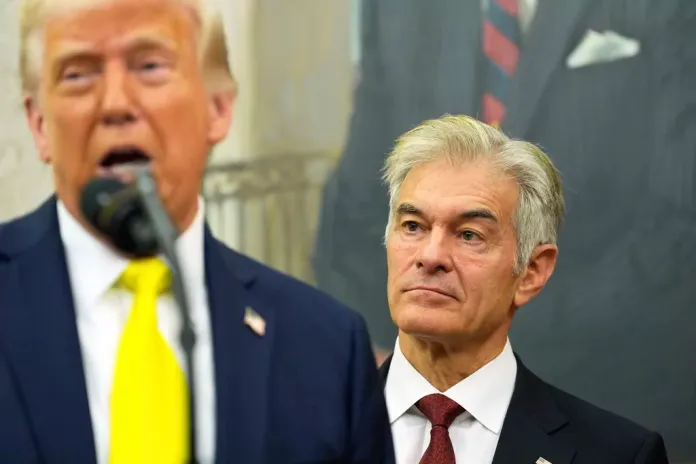
Oz says Trump administration weighing extending ACA subsidies
Centers for Medicare and Medicaid Services Administrator Mehmet Oz confirmed Sunday that the Trump administration is mulling the extension of Affordable Care Act premium tax credits. The premium tax credits initially drafted under the Affordable Care Act were enhanced under the Biden administration during the COVID-19 pandemic. These credits were set to expire at the [.].
Biss commits to mayoral succession plan
Says he plans to resign before late-November deadline, triggering April 2027 special election, if he wins.
The Pelosi Era Nancy Pelosi may be leaving Congress, but her brand of progressive power politics isn’t—her era is not ending, it’s only just beginning. By Stephen Soukup
The other day, Nancy Pelosi-the longtime Democratic Congressional leader and the first and only female Speaker of the House-announced that she will not seek reelection next year. Unless she retires before this term is up, Mrs. Pelosi, who is also one of the most successful investors of her generation, will be just shy of 87 years old when she returns home after 40 years in Congress and a lifetime in and around politics. Because Pelosi was the first woman Speaker and because she has been the face of Congressional Democrats for so long, many in the mainstream media are calling her decision not to run for another term the “end of an era.” I beg to differ. While Nancy Pelosi’s tenure in office may be coming to a close, the era in American politics that she helped inaugurate is nowhere near finished. Indeed, after this past week’s off-year elections, it has new life and new momentum. Pelosi may be leaving Congress, but this is not the end of her era. It is, rather, the end of the beginning of her era-“the Pelosi Era.” Just over three months ago, I used this space to heap considerable scorn on former President Barack Obama, whom I blamed for helping to inaugurate the “total state” in American politics. “In 2008,” I wrote, “Americans were given implicit permission to hate one another for their differing ‘values’ and to see one another exclusively as friends or enemies in accordance with those values.” Obama, I continued, “took the political and cultural degeneration of the previous two centuries and made the acknowledgment and application of that ‘ruin’ socially acceptable, if not socially mandatory.” It is important to note, however, that Barack Obama and his divisiveness did not emerge onto the political scene fully formed, like Athena springing forth from the forehead of Zeus. They were part of an overarching trend in American politics that began in earnest a full six years before his election. Dating the beginning of a historical epoch is always difficult, often far more so than identifying its end. Nevertheless, the current epoch can likely be said to date from November 14, 2002. On that day, the House Democratic Caucus convened to choose a new leader.
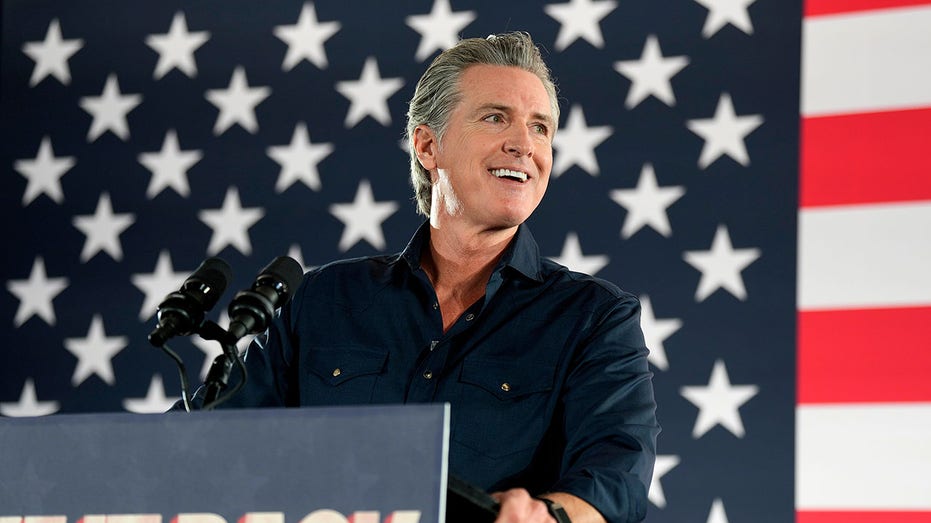
Newsom tells Texas crowd taking back House is ‘the whole thing’ for Democrats in 2026
The California governor celebrated Proposition 50’s victory Saturday, calling the redistricting battle “the whole thing” for Democratic hopes in upcoming midterm elections.
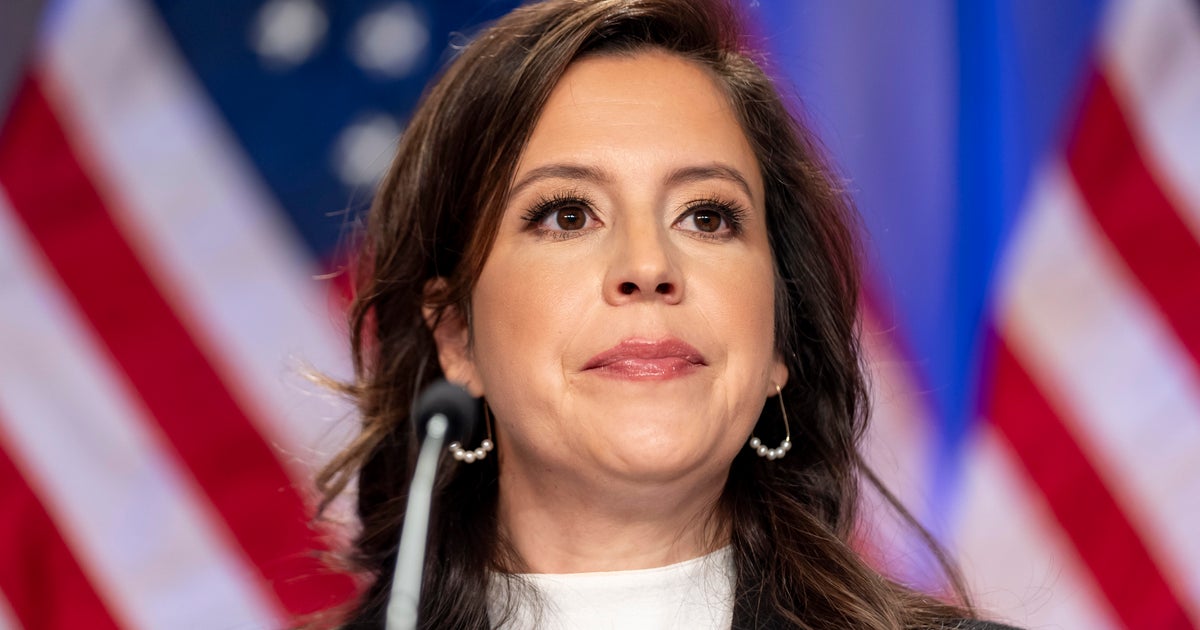
Rep. Elise Stefanik announces run for New York governor
Rep. Elise Stefanik announced she is running for governor of New York, challenging Gov. Kathy Hochul in the 2026 election.

Young voters are growing more tolerant of political violence
A rising number of young people are embracing the idea that political violence is acceptable, thanks in part to increasingly hysterical Democratic rhetoric and the tolerance of blatant acts of violence on the national stage. A Politico-Public First poll found that 36% of adults aged 18 to 24 believe “there are some instances where violence is justified” when [.].