
The post Biometric Blockchain Platform Serenity Clears MiCA Registration as Europe’s Regulatory Wall Locks Out Hundreds appeared com. As dozens of firms secure coveted EU crypto registrations and hundreds remain locked out, Serenity biometric platform joins the regulatory winners’ circle. In the seven months since Europe’s Markets in Crypto-Assets (MiCA) regulation took full effect, the battlefield has become brutally clear: you’re either registered, or you’re out. By July 2025, just 53 entities had secured full MiCA authorizations-14 e-money token (EMT) issuers and 39 crypto-asset service providers (CASPs) across the entire European Union. Over 120 enforcement actions had targeted non-compliant projects. More than 250 crypto startups postponed European launches due to regulatory delays. And Tether, the world’s largest stablecoin, was delisted from major EU exchanges for failing to meet reserve requirements. Now, Serenity-a Dubai-based biometric authentication and tokenization infrastructure company-has secured white paper notification through the Malta Financial Services Authority (MFSA) and publication in the ESMA Interim MiCA Register. The achievement positions Serenity’s ERSH token among the first wave of projects to complete MiCA’s notification process. White Paper Notification vs. Full Authorization: What Serenity Actually Achieved Here’s what matters: Serenity didn’t need a license. And that’s precisely the point. Under MiCA Title II, offerors of “Other Crypto-Assets” (OCAs)-tokens that aren’t stablecoins or asset-referenced tokens-must notify their white paper to competent authorities at least 20 working days before publication. The authority has five working days to review for completeness. But crucially, no prior approval is required. Once notified, the white paper can be published on the issuer’s website, and the token can be lawfully offered across all 27 EU member states. The notification is then recorded in ESMA’s central register, creating a public record of compliance. This differs dramatically from the authorization required for CASPs (crypto-asset service providers), which face extensive capital requirements, ongoing supervision, and multi-month application processes. It also differs from Asset-Referenced Tokens (ARTs), which require prior approval of.
Tag: tether

It’s time for institutional stablecoin adoption
The post It’s time for institutional stablecoin adoption appeared com. Homepage > News > Business > It’s time for institutional stablecoin adoption What was initially promised to be a ‘crypto’ revolution has settled into something starkly different, though just as disruptive: a stablecoin revolution. Yes, as world leaders pump their own memecoins and legislatures pass measures which specify exactly how much BTC a bank can keep on its balance sheet, the winner has been the assets that are most divorced from the volatile, number-go-up circus of ‘crypto’ markets, yet manage to deliver the practical benefits of digital currency. In other words, the world is beginning to prioritize utility over volatility. The numbers bear this out. The total market capitalization of stablecoins is now over $300 billion. The third-largest coin on the market, after behemoth first movers BTC and ETH, is Tether (USDT), a stablecoin with a market cap of $183 billion. When you look at which coins are actually being used, stablecoin dominance becomes even clearer. In any given 24-hour period, USDT dominates transaction volumes. At the time of writing, $126. 7 billion in USDT transactions had been made. BTC and ETH come in as distant seconds and thirds ($74 billion and $37. 6 billion, respectively), while another stablecoin, Circle’s (NASDAQ: CRCL) USDC, pulls in at fourth (with a 24-hour transaction volume of almost $12 billion). Not surprisingly, Tether accounts for a substantial 59. 6% of the market cap. However, as stablecoins have taken up an increasingly large share of the digital asset conversation, this trend has also shifted: the figure peaked at 75% in September and has since declined. Its share of the pie is being eaten by swathes of new offerings. There are alternate USD-pegged assets-which make up the entirety of the top ten stablecoins-but also alternate currency pegs such as Circle’s EURC or any number of Renmibi-linked assets. Put simply:.

$1.15 Billion Robotics Startup Deal That Could Reshape Crypto
The post $1. 15 Billicom. In a groundbreaking move that could reshape the cryptocurrency landscape, Tether is reportedly considering a massive $1. 15 billion investment in German robotics startup Neura. This potential Tether investment represents one of the largest crypto-to-traditional-tech moves in recent history, signaling a bold expansion strategy from the world’s largest stablecoin issuer. Why Is This Tether Investment So Significant? The potential $1. 15 billion Tether investment in Neura marks a strategic pivot beyond traditional cryptocurrency domains. Tether, primarily known for its USDT stablecoin, has been actively diversifying its portfolio across multiple sectors. This particular investment would represent their largest single commitment to date in the robotics and artificial intelligence space. According to industry reports, discussions between Tether and Neura remain in early stages. However, the implications are substantial. If finalized, this Tether investment could catapult Neura’s valuation to between $9. 3 billion and $11. 6 billion, creating one of Europe’s most valuable robotics companies overnight. What Does This Mean for Tether’s Investment Strategy? Tether’s investment approach has evolved significantly over recent years. The company has already invested in 140 companies across various sectors including: Bitcoin mining operations Energy sector companies Financial technology firms Artificial intelligence startups This potential robotics investment demonstrates Tether’s commitment to diversifying beyond cryptocurrency. The move aligns with their broader strategy of building a comprehensive technology ecosystem rather than focusing solely on digital assets. How Could This Tether Investment Impact the Robotics Industry? The massive scale of this Tether investment could trigger significant changes in the robotics sector. Neura, as a German startup, would gain unprecedented resources to accelerate its research and development efforts. Moreover, the validation from a major cryptocurrency player could attract additional blockchain and crypto investors to the robotics space. This Tether investment also highlights the growing convergence between cryptocurrency wealth and cutting-edge technology development. The influx of crypto capital.

Tether Expands into Commodity Lending, Extends $1.5 Billion in Credit
The post Tether Expands into Commodity Lending, Extends $1. 5 Billion com. TLDR Tether has extended $1. 5 billion in credit to commodity traders, providing financing in both USDT and cash. The company plans to dramatically expand its presence in commodity lending, targeting agricultural products and oil. Tether’s Trade Finance unit focuses on short-term credit to facilitate global supply chains and commodity trades. Despite some reluctance from traders to borrow in USDT, Tether’s growing financial influence is expected to overcome these concerns. Tether has also seen success with its tokenized gold product, Tether Gold, and holds more than 100 tons of physical gold. Tether has entered the commodity lending market, with $1. 5 billion already extended to traders. The stablecoin issuer is providing both cash and its USDT stablecoin for financing. CEO Paolo Ardoino announced plans for significant expansion in this sector. Tether’s Trade Finance Unit and Focus on Commodities Tether’s Trade Finance unit is driving its venture into commodity lending. The unit focuses on short-term credit to facilitate global supply chains. It aids traders in purchasing, transporting, and delivering goods, including agricultural products and oil. Ardoino confirmed that Tether has already extended $1. 5 billion in credit. He emphasized the firm’s strategy to “expand dramatically” in the coming months. This expansion follows Tether’s strong financial position, with nearly $184 billion worth of USDT in circulation. Tether aims to serve traditional commodity traders by providing the liquidity they need. The company believes it can offer an attractive financing option compared to conventional banks. This move further solidifies Tether’s role in the global financial landscape. Challenges in Borrowing USDT for Commodity Trades Some traders remain hesitant to borrow in USDT rather than traditional dollars. This reluctance stems from concerns about stablecoin volatility and regulatory uncertainties. However, Tether’s growing influence in the market may soon overcome these concerns. Despite these hesitations, Tether’s growing financial power is gaining.

Tether taps HSBC executives to ramp up $12b gold strategy
Tether is tapping the senior executives of a firm that oversees one of the world’s most extensive gold vaults.
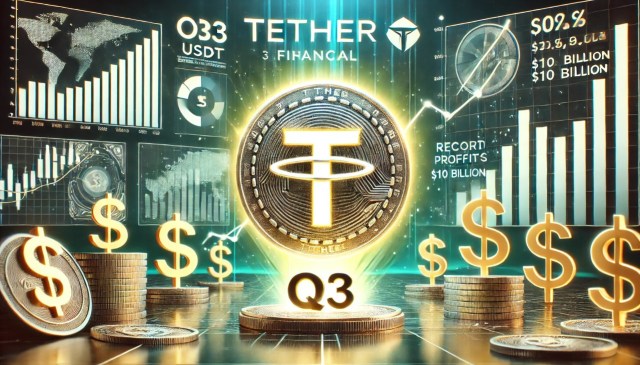
Tether Releases Q3 Report: Profits Surpass $10 Billion, Marking A Strong Year-to-Date Performance
Tether, the issuer of the world’s largest stablecoin, USDT, has announced impressive financial results in its third-quarter (Q3) attestation report, revealing year-to-date profits that exceed $10 billion. Tether Discloses Billions In Gold And Bitcoin Holdings The third quarter of 2025 marked a significant milestone for the firm, with over $17 billion in new USDT issued-one [.].
Tether Set to Hit $15B Profit, Eyes USAT Stablecoin Launch in December
The post Tether Set to Hit $15B Profit, Eyes USAT Stableco With profits soaring and investors knocking at its door, CEO Paolo Ardoino is hinting at exciting plans ahead. Here’s a look. Tether’s Profits Near $15 Billion According to a report from Bloomberg, Tether is on track to.