First, there was the Visalia Ransacker. Then there was the East Area Rapist. Then the Original Night Stalker. From 1974 until 1986, a string of burglaries, rapes, and murders were committed across California, in places including Sacramento, Contra Costa, San Joaquin, Ventura, and even right here in Santa Barbara County.
It wasn’t until 2001 that breakthroughs in DNA technology proved what law enforcement had already suspected: These three attackers were the same man.
Crime writer Michelle McNamara chronicled the case in her 2018 book *I’ll Be Gone in the Dark* (published posthumously after her death in 2016), in which she coined the name “the Golden State Killer.” For the first time, many previously unconnected crimes were linked in the consciousness of both law enforcement and the public as the work of one man—though his identity and whereabouts remained unknown.
With the advancement of DNA identification and genetic genealogy tracing, detectives were able to follow the threads of DNA gleaned from crime scenes through a family tree and land on one man by the name of Joseph James DeAngelo.
In April 2018, at the age of 72, DeAngelo was arrested at his Sacramento home and officially charged with eight counts of first-degree murder with special circumstances, with four additional counts of first-degree murder added later.
A case of this magnitude—13 known murders, more than 50 sexual assaults, and more than 120 burglaries spanning decades and multiple cities and counties, with the possibility that new crimes could be uncovered or linked through further investigation—required a prosecutorial team of organized, dedicated individuals unafraid of a challenge.
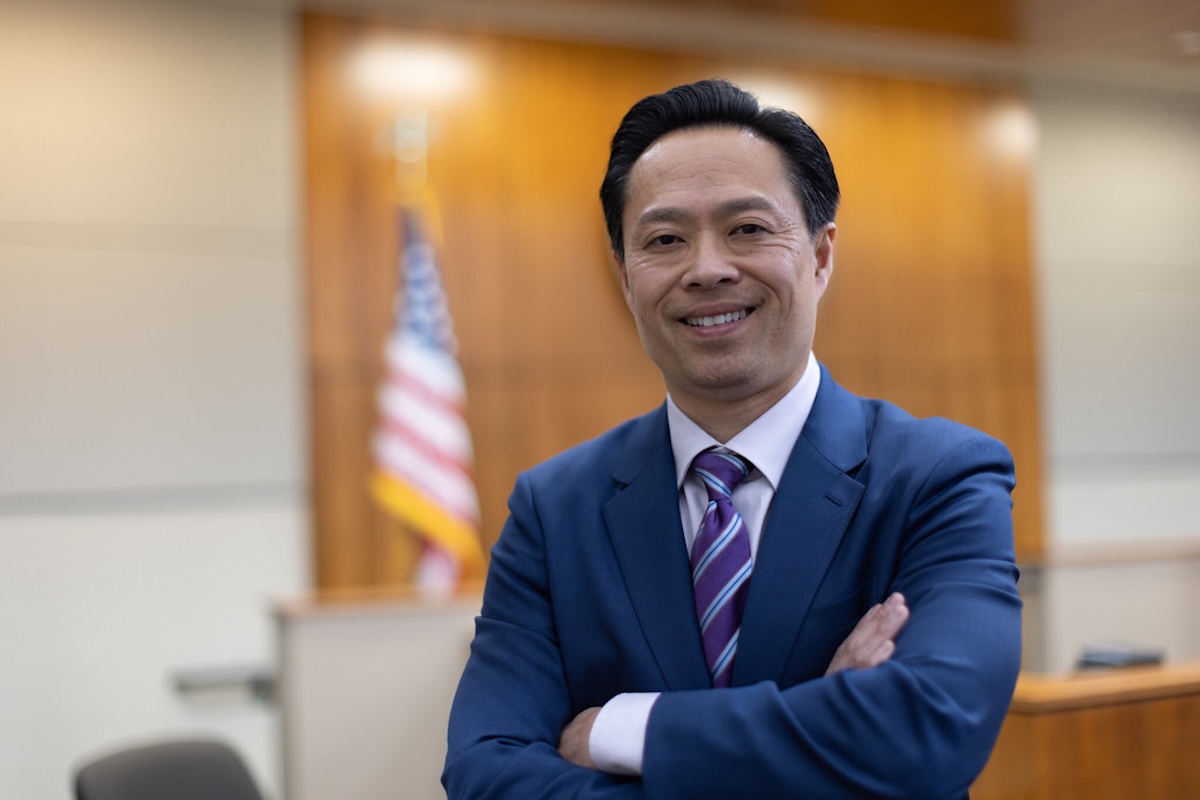
Enter Thien Ho, a Sacramento County prosecutor who met the challenge head-on and, in 2020, successfully prosecuted Joseph James DeAngelo, the infamous Golden State Killer.
Now the District Attorney of Sacramento County, Ho has penned a book about the case: *The People vs. the Golden State Killer*. This comprehensive book offers a detailed rundown of the crimes, police investigation, arrest, and trial. It’s no small feat to compile the details of a case that began in the ’70s into one volume, but Ho accomplishes it with a focus on the best of humanity to offset the worst.
From delving into his own family story about his parents’ escape from Vietnam with small children in tow; to painting a vivid picture of the people the victims were in life; to including the voices and experiences of the survivors—the book is a fascinating look at the man behind the myth and the countless lives affected.
I had the pleasure of interviewing Thien Ho about the historic trial, his writing process, and the ongoing pursuit of justice.
—
**Your family background and your parents’ bravery while escaping Vietnam is amazing. How did your family story prepare you for your career and life now?**
Like many immigrants who come to America in hopes of living the American Dream, I felt that our life here represented a second chance. California is a home for people searching for second chances. As such, I felt a heavy responsibility to earn this second chance and give back to our community.
A prosecutor represents the true gatekeeper to our system of justice and has a profound effect on the community. This principle of “service above self” permeated my personal philosophy, which was ultimately shaped by my immigrant experience.
—
**I enjoyed Michelle McNamara’s *I’ll Be Gone in the Dark*, but it’s incredible to read a complete book about the case, knowing that the killer has been caught and convicted. What made you decide to write a book about this case, and what was the process like?**
After I was first assigned to prosecute the Golden State Killer, I bought Michelle’s book and read it in two days.
Many true crime books focus on the crime or criminal. However, I wanted to write a true crime memoir that shined a light on the generations of law enforcement who never gave up on their search for this monster. Additionally, I wanted to provide a platform that amplified the voices of victims who turned their tragedy into triumph.
As a first-time writer, I wrote a 30-page outline of the book. I woke up every morning at 5 a.m., spending two hours of nonstop writing. I would then send a draft to my editor in New York, who provided me feedback. I finished writing the book in seven months.
—
**Coordinating a case of this magnitude is no small feat—you mention the multiple teams responsible for cataloguing evidence, reinterviewing witnesses and survivors, tracing through DeAngelo’s background, etc. With so much to keep track of, were there any surprises? What was the most unexpected outcome from the case or trial?**
I never thought that the Golden State Killer would admit to his crimes and plead guilty to multiple life terms.
In retrospect, that made sense, as Joseph DeAngelo craved and needed control. If we proceeded to trial, we would call hundreds of witnesses, detailing all his monstrous deeds and failings. He would be forced to sit there with little or no control. His decision to admit guilt represented his last ounce of control.
—
**The Golden State Killer and his various other iterations (EAR/ONS, etc.) became something of a mythical boogeyman in people’s minds for so long. Did anything stand out to you about the actual man versus the mythos surrounding him?**
The boogeyman of our childhood and the monsters of our nightmares are much more menacing than reality. When we finally caught him, he looked like a drunk uncle at Thanksgiving, wearing a stained white T-shirt, cargo shorts, and tube socks. He looked weak and feeble.
Ultimately, we discovered that he was an insecure individual who craved control and power because he felt insignificant physically and personally.
—
**You picked the famous booking photo of DeAngelo that told the world the Golden State Killer was finally unmasked. Can you explain more about your thought process during the selection of the photo?**
I picked the booking photo that was ultimately released. I knew that photograph would be shown in articles and on televisions around the world. I wanted the photo to reflect his depravity.
The eyes are the windows into a person’s soul, and in that particular photo, his eyes were particularly dead and creepy.
—
**I was particularly impressed by your empathy and compassion toward the survivors of DeAngelo’s crimes. How do you keep a balance between the cold, hard facts in the courtroom and the heavy emotions surrounding these crimes, as well as protecting your own mental health?**
There really is no separation, emotionally. Over the years, I have struggled with insomnia and restlessness. Seeing so much darkness and evil tends to jade my view of humanity. But when I see the resiliency and strength of spirit demonstrated by so many survivors—people like Kris Pedretti—it inspires me and reaffirms my belief in the strength of the human spirit again.
—
**After hitting a dead end with the search for the stolen property that DeAngelo took from his victims, you mention that the team has not given up. Have there been any further developments on that front that you can talk about?**
We are constantly looking for those trophies and will never stop looking for them.
—
**Including the survivors’ victim impact statements at the end of the book was so powerful; it was incredible to hear from them in their own words. Tell me more about your decision to feature the survivors so prominently in your book.**
As I mentioned, many true crime books focus on the criminal and the crime. I want to shift the genre away from that and instead put the focus on the survivors, who turned pain into power.
We are surrounded by darkness and evil, especially when discussing these cases. I wanted to balance that darkness with the hope and resiliency of the survivors.
—
**This case is historic for a number of reasons—the sheer magnitude and number of crimes, conducting the trial through the COVID-19 pandemic, etc. I imagine it takes every ounce of energy and knowledge one possesses to get the job done. What did you discover about yourself while prosecuting this case or writing this book?**
We are the sum of the choices that we make in life. We can choose darkness or light, hate or love, despair or hope.
Joseph DeAngelo chose evil over good. The survivors chose love and purpose, and that is worth remembering and celebrating.
https://www.independent.com/2025/12/14/the-people-vs-the-golden-state-killer-is-an-inside-look-at-one-of-the-most-notorious-serial-killers-in-california-history/