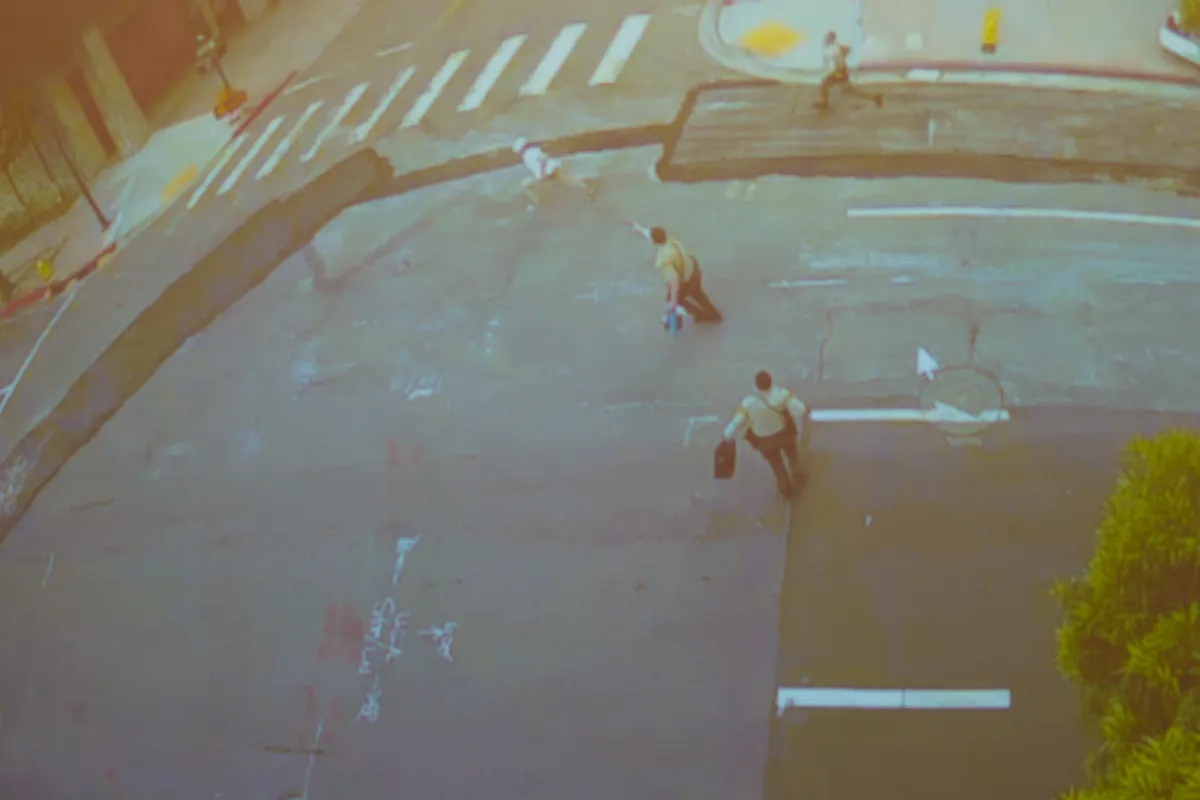
A former San Diego County sheriff’s deputy who fatally shot a fleeing detainee in the back nearly six years ago is seeking to delay his federal civil rights trial scheduled for later this month. He argues that he can’t receive a fair trial “given the current political climate” in the wake of two recent fatal shootings by federal agents in Minneapolis.
Aaron Richard Russell is charged with depriving Nicholas Bils of his rights under color of law for shooting the unarmed Bils in the back in May 2020 outside the downtown Central Jail. Russell was previously tried on that same charge last year, but a judge declared a mistrial after the jury deadlocked. A new trial is slated to begin on February 17.
Russell is now seeking to postpone the trial by 90 days, arguing that the recent killings of Renée Good and Alex Pretti by federal agents in Minneapolis have “dominated the news cycle.” Given the similarities to Russell’s case, he claims jurors likely will not be impartial toward him.
U.S. District Judge Todd Robinson is expected to address the motion at a previously scheduled hearing on Wednesday.
“Regardless of any instruction the jury receives, the reality is that it will be impossible for jurors to put aside any strong feelings they have about the other shootings of unarmed individuals,” defense attorneys Jeremy Warren and Miguel Peñalosa wrote in a motion filed last week. “Mr. Russell will bear the brunt of any jurors’ frustration with the administration’s perceived failure to investigate the recent shootings or hold officers to account.”
Federal prosecutors oppose the delay. They argue, in part, that there is no legal precedent for such a postponement based on “general publicity” rather than publicity about a particular case.
Assistant U.S. Attorney Seth Askins also called it “pure speculation” that a 90-day delay would be enough time for shootings by federal agents to no longer dominate the news cycle and public consciousness.
“The debate over immigration policy and the current methods of enforcement, which often involve the use of force by federal law enforcement officers, has been ongoing for many, many months and shows no sign of stopping,” Askins wrote. “While it is hypothetically possible that tensions may ease in the coming months and/or media coverage will abate, it is equally possible that the use of force by federal law enforcement officers will remain a topic of great public interest or even receive greater coverage and debate, especially if another high-profile incident were to occur.”
The U.S. Attorney’s Office in San Diego declined to comment, as did Warren, the defense attorney.
### Background of the Incident
Russell, 29, shot and killed Bils on the evening of May 1, 2020, a little more than a month into the COVID-19 pandemic. Bils had been arrested by California State Park rangers for violating COVID restrictions at Old Town San Diego State Historic Park.
He was in the back of a ranger’s car just outside the downtown jail when he slipped one hand out of his handcuffs, reached out the back window—which was slightly open because of pandemic protocols—and opened his door using the outside handle.
Video played during Russell’s first trial showed that as Bils began to run away, a second ranger was trying to get out of his agency pickup truck nearby. Bils pushed the truck’s door—not hard enough to close it on the ranger—and then sprinted north on Front Street with the handcuffs still attached to one wrist.
Russell, who was 23 at the time and had graduated from the San Diego Regional Training Academy barely a year earlier, was walking to work at the jail alongside another deputy. He saw Bils escape from the opposite curb, then stepped into the street and quickly fired five shots from close range without warning. At least four of the shots struck Bils, including one that pierced his back.
Russell resigned from the Sheriff’s Office five days after the shooting, and a few weeks later, county prosecutors charged him with second-degree murder. He became the first San Diego-area law enforcement officer to face a murder charge in the shooting death of a suspect. He was also the first officer in California to face a murder charge under stricter use-of-force standards that went into effect just months before the shooting.
He eventually pleaded guilty in 2022 to a state charge of voluntary manslaughter and served about five months in jail. In his plea agreement, he admitted that he “unreasonably believed that the immediate use of deadly force was necessary.”
In 2022, the county agreed to pay $8.1 million to settle a federal lawsuit filed by Bils’ family.
### Federal Civil Rights Case
In May 2024, more than four years after the shooting, a federal grand jury indicted Russell on civil rights violation charges.
Russell went on trial last May, testifying that he believed the handcuffs around Bils’ wrist were a gun. Footage of the shooting showed that while Bils was still stumbling after being shot, Russell put his gun back in its holster. Prosecutors argued that by re-holstering so quickly, Russell demonstrated he never truly believed Bils was armed or posed a deadly threat.
The jury was unable to reach a unanimous verdict, resulting in a hung jury, and Judge Robinson declared a mistrial.
The upcoming trial, and the motion to delay it, highlight ongoing tensions and scrutiny around law enforcement use of force, especially in cases involving federal agents and detainees. The judge’s decision will be closely watched as it may have implications for high-profile cases amid a charged political climate.
https://www.sandiegouniontribune.com/2026/02/03/ex-san-diego-deputy-who-shot-fleeing-man-seeks-trial-delay-citing-shootings-by-feds-in-minnesota/