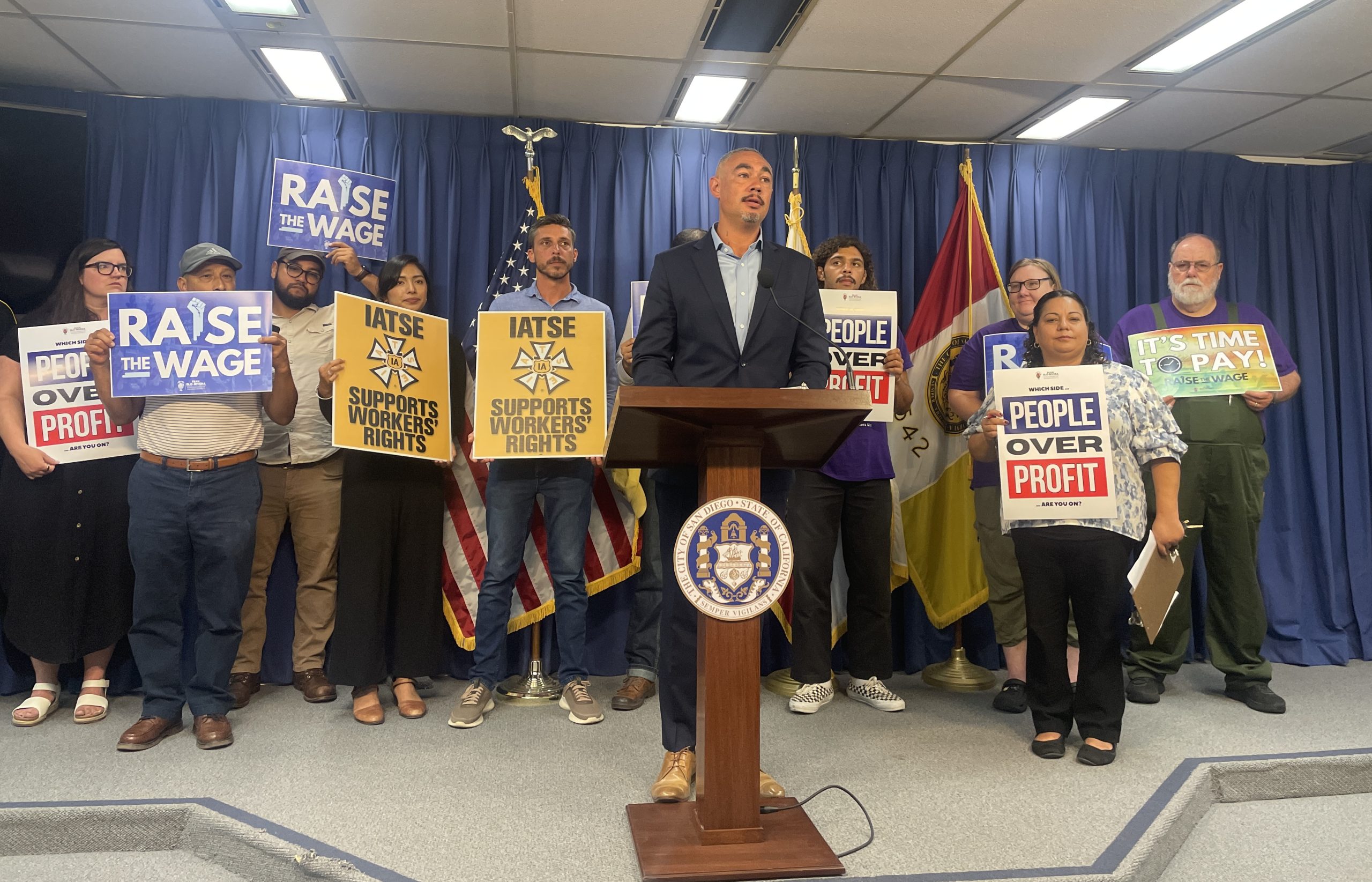
A proposal to tax vacation rentals in San Diego died in committee Wednesday, dealing another blow to efforts aimed at shifting some of the city’s financial burden onto participants in its thriving tourism economy.
Councilmember Sean Elo-Rivera had hoped to target certain owners of vacation properties with an $8,000 tax for operating short-term rentals, including a surcharge for corporate ownership. The tax would also have applied to owners of homes allowed to sit empty by absentee owners.
More than 100 speakers testified before the Rules Committee, which spent five hours reviewing the proposal before voting 3-2 to kill a scaled-back version of the plan. Council President Joe LaCava, who chairs the committee, seconded the motion; however, the proposed changes were insufficient to salvage the plan.
The proposal was part of a multi-pronged effort to find new revenue sources for the city, which struggled with a deficit last year and anticipates more financial challenges ahead. Although the city council passed a balanced budget in June, the budget is currently not balanced. LaCava stated on Tuesday that he and his colleagues “will be discussing mid-year adjustments to keep us on track for a balanced budget.”
Elo-Rivera has focused on the revenue side of the equation, especially ways to charge fees to tourists and non-residents for using San Diego amenities. He previously supported fees for parking at Balboa Park, a plan that he, along with Councilmembers Jennifer Campbell and LaCava, have since backpedaled on amid growing community, institutional, and political pressure.
While targeting owners of short-term vacation rentals could have generated revenue, Elo-Rivera cited housing as his primary concern. He suggested that the tax might “disincentivize” owners from operating short-term rentals, potentially freeing up homes and apartments for local, long-term residents in a market where housing is scarce and costly.
The committee’s decision on Wednesday means the plan will not advance for review by the full city council. The council could have placed the proposal on the ballot for voters to decide later this year, but the committee declined to allow further debate. Councilmember Campillo expressed the strongest objections, including concerns that the tax could expose the city to legal challenges.
“Fundamentally, the city will lose more revenue on this than it can ever hope to gain,” Campillo said. Councilmember Monica Moreno cited declines in travel affecting major markets, including San Diego. Although the city’s drop-off has not been steep, she stated she was unwilling to support a plan that “risks becoming a tipping point that erodes the buffer that we currently have.”
The debate proved contentious, with the San Diego-Imperial Counties Labor Council setting the tone by issuing a news release ahead of the meeting. The council accused opponents of using a political consulting firm to recruit and pay San Diego residents to attend public proceedings related to the vacation home tax.
Elo-Rivera addressed this argument before the Rules Committee Wednesday, stating, “It is my understanding that many people were recruited, many who were paid to be here for the first time.” He added that those behind the effort are “people who believe they should be able to charge as much as they want for rent, don’t want to pay people enough for a living wage, and support for-profit prisons.”
This complaint appeared aimed at the San Diego Regional Chamber of Commerce, which labor groups have linked to the Geo Group, a firm that operates the Western Region Detention Facility in San Diego.
Chris Cate, the Chamber’s president and CEO, did not respond directly to the criticism. Instead, he focused on the merits of the rental tax proposal, which the Chamber has opposed since Elo-Rivera first introduced it last year.
“This broad tax is not a thoughtful solution,” Cate told the committee.
After the vote, other labor groups also responded to the plan’s failure. San Diego City Firefighters President George Duardo stated, “Blocking the Empty Second Home and Vacation Rental Tax is a mistake.” Conversely, Laborers Local 89 praised the committee’s decision. Valentine Macedo, the local’s business manager and secretary-treasurer, said, “These proposals asked voters to approve new taxes without defined priorities, without guaranteed funding for infrastructure or housing production, and without certainty that the revenue would translate into real projects or real jobs.”
Before the vote, LaCava remarked that he feared there is “a lot of gaslighting in this conversation, meant to mislead the average San Diegan who isn’t paying attention to what’s going on at City Hall.”
Kevin Hastings, an Ocean Beach resident, voiced support for Elo-Rivera’s proposal. “Man, I hate taxes,” he said, “but this might be the first tax I support.” Hastings also called out Airbnb, an opponent of the plan, while addressing some of his fellow speakers.
He noted that many who opposed the levy “will not be touched by these taxes, but you are here to toe the line on Airbnb. This proposal will help you. It will give you a leg up on people running a dozen Airbnbs.”
The loss is a significant setback for Elo-Rivera, who held a series of news conferences last week to rally support for his revised proposal, which initially included a $5,000 per bedroom tax for applicable short-term vacation rentals.
This defeat follows his successful effort last fall to pass a city ordinance establishing a higher minimum wage for workers in parts of the hospitality industry.
In a statement, Elo-Rivera called Wednesday’s outcome “deeply disappointing,” yet signaled where his efforts might focus next.
“If anything,” he said, reiterating his concerns about paid speakers at the committee hearing, “the methods used by our opposition have only strengthened my resolve to keep pushing for a San Diego where homes are for people, not just for profit, and where powerful corporations are held accountable when they undermine our communities. That starts by going after corporations that are buying up homes that should be for everyday people.”
https://timesofsandiego.com/politics/2026/01/28/committee-kills-short-term-vacation-rental-tax/